imagine
verb [T] /ɪˈmædʒ.ɪn/
From Latin imāginor, the accusative singular of imāgō (“a copy, likeness, image”)
Pitt Rivers Museum: 'Made in Imagination'

These objects have been made purely from the historical descriptions of artefacts found on The Pitt Rivers Museum database. There were no photographic images of the objects on record at the time of making, neither were they on display in the museum.
By examining the customs and rituals of a variety of cultures, both the similarities and the differences in traditions and fashions becomes apparent and associations can be made between historical, geographical and contemporary fashions.
These objects were on display at the Pitt Rivers from October 2017 - March 2018. For further information on these and many more artefacts visit the museum's database.

AG1894.27.200
Charm string with rolled up sheets of inscribed lead worn as a bracelet, against witches and devils.
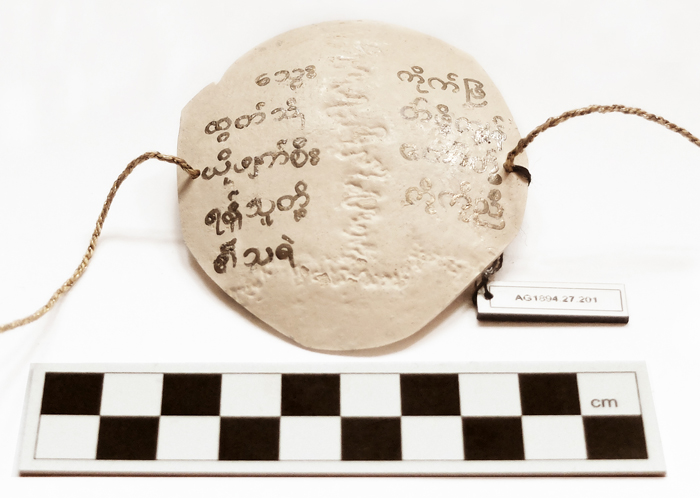
AG1894.27.201
An inscribed charm made from a piece of human skull (said to be that of a man who met an accidental death) inscribed in gilt lettering. Mounted on string and worn on the forehead as being gunproof, and as protection against various weapons.

AG1897.56.22
Pig's skull preserved as memento of a feast.

AG1899.62.392.1
"Cap of Death" made of spider's web and human hair string. Drawn over widows' eyes when they were strangled at their husband's funerals.
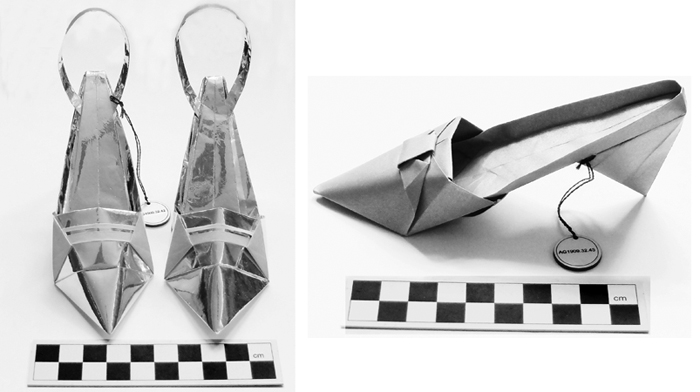
AG1909.32.43
Model of four silver paper shoes for burning at funerals.

AG1910.9.1
Metal charm worn in hair in the form of a pair of closed scissors to prevent 'split ends'.

AG1912.48.1
Black paper cap worn by Jewish people when saying grace at mealtimes.

AG1919.26.14
Bamboo cup, decorated with string and cowrie shells, for use at the second funeral of a Toda woman.

AG1921.9.42.1
Two crocodile eggs such as were used to hold the poison potion for the kings of ANKOLE and BUNYORO when they were about to end their lives.

AG1923.28.57
Pumpkin covered with cloth and painted, hung up as an ex voto in the temple of Subrahmaniyam by women whose breasts are not well developed.

AG1948.12.36
Cap of skin, with metal studs round edge and tuft of feathers at peak.
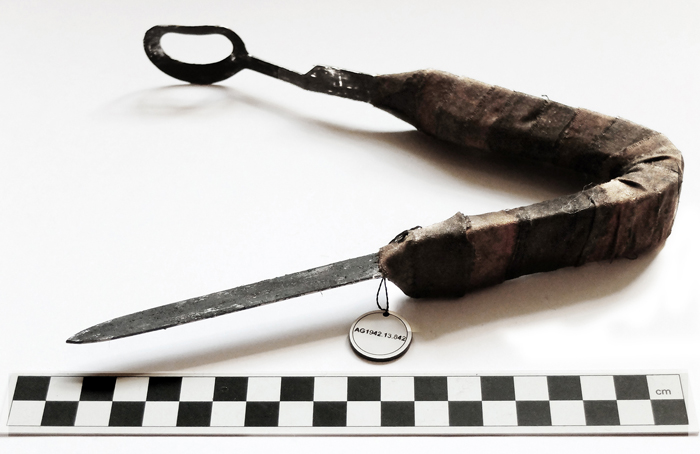
AG1942.13.835
Tool for cleaning kola nuts and lancing boils.

AG1961.3.015
Mourning bracelet made from plaited brown human hair with a gold clasp.

AG1963.10.77
Two wooden finger nail guards, about 6 inches long, for protecting long nails in bed.

AG1980.9.4
Wax ex voto figure representing a woman's head and bust.

AG1985.49.151
String collar threaded from slices of bottle cork alternating with seeds (cashew?) seeds; recorded as “worn by dogs against cold-catching”.

AG1988.41.3
Necklace of a strip of lizard skin to which are stitched numerous bird of prey claws and 3 pendant tags of lizard skin.
Label text Copyright 2012 - The Pitt Rivers Museum, University of Oxford.
Some of the terminology reproduced may come from historical sources and thus be outdated.